
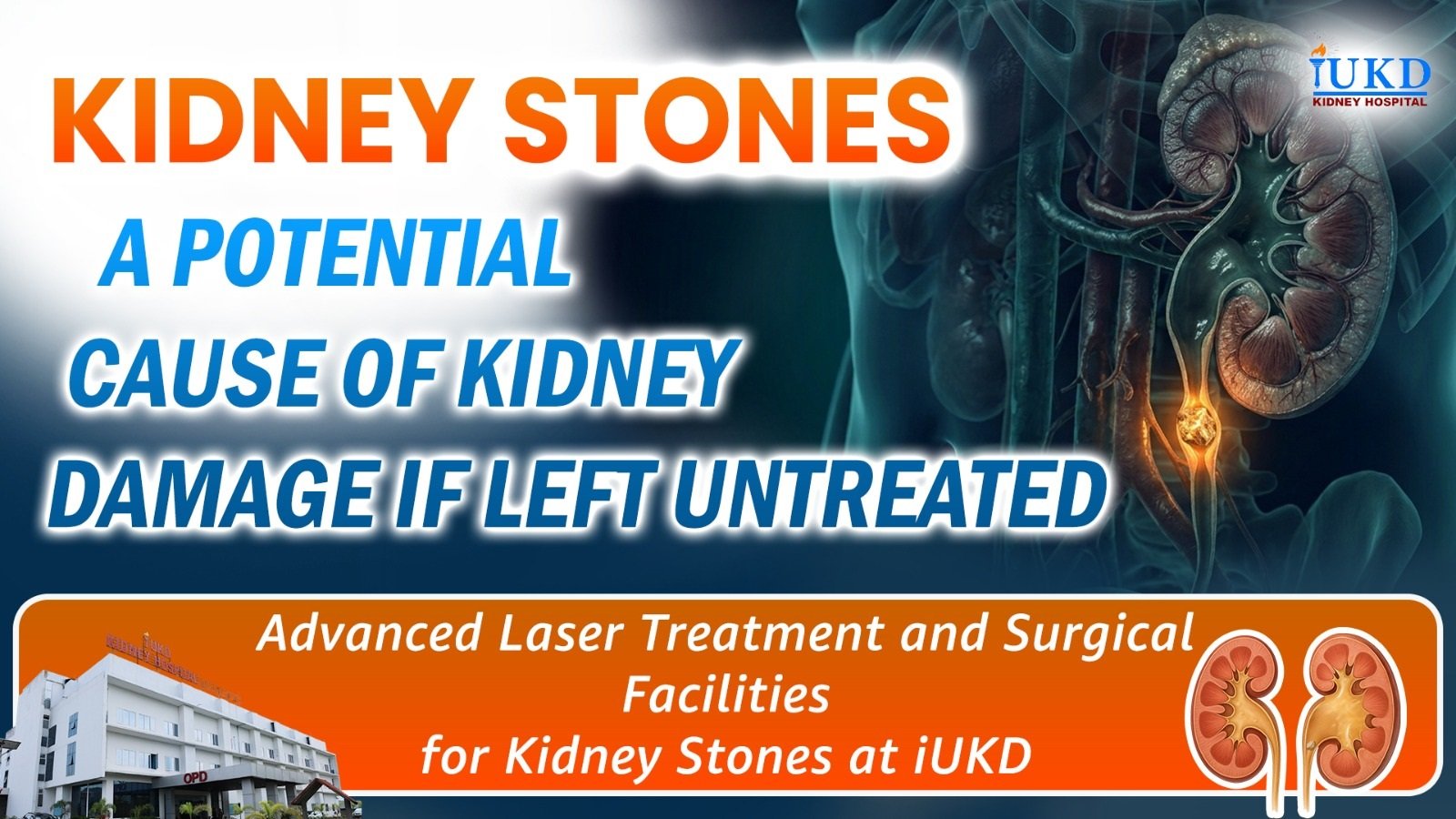
Advanced Laser Treatment and Surgical Facilities for Kidney Stones at iUKD
The kidneys are among the most vital organs of the human body. They play an essential role in filtering the blood, removing waste products and eliminating excess fluids from the body through urine. However, various factors can lead to the formation of stones in the kidneys, a condition commonly known as kidney stones or renal calculi. If left untreated, kidney stones can interfere with normal kidney function and, in certain complicated cases, may even cause permanent kidney damage.
Normally, urine contains several minerals, salts and other substances, including calcium, sodium, oxalate and uric acid. When these substances become excessively concentrated in the urine, particularly due to insufficient fluid intake, they can form tiny crystals. Over time, these crystals accumulate and develop into hard deposits known as kidney stones. While smaller stones may pass naturally through the urinary tract, larger stones or those causing complications may require specialised medical treatment or surgical intervention.
In recent years, kidney stone problems have become increasingly common. Inadequate water intake, dehydration, unhealthy dietary habits, hereditary factors and certain metabolic disorders can increase the risk of developing kidney stones.
One of the most common symptoms of kidney stones is severe pain in the back, sides, waist or lower abdomen. The pain may occur suddenly, fluctuate in intensity and sometimes become extremely unbearable. Other symptoms include blood in the urine, which may appear pink, red or brown; frequent urination; a burning sensation while passing urine; nausea and vomiting. In cases associated with urinary tract infection, patients may also experience fever and chills. However, some individuals may have kidney stones without experiencing any noticeable symptoms.
Therefore, it is important not to ignore these warning signs. Anyone experiencing such symptoms should consult a qualified urologist without delay. In particular, fever and chills accompanied by symptoms of kidney stones require immediate medical attention, as an infected and obstructed urinary tract can lead to serious complications.
Located at Nazirakhat, Sonapur, Guwahati, iUKD (Institute of Urology and Kidney Diseases) is one of the specialised kidney hospitals in the North-Eastern region, providing comprehensive medical services for various kidney and urinary tract disorders.
For the treatment of kidney stones, iUKD offers advanced medical facilities, including laser-assisted procedures and surgical interventions. Under the supervision of experienced urologists, appropriate treatment methods are selected according to the patient’s medical condition, as well as the size and location of the stones. Patients from different parts of the North-East have already received advanced kidney stone treatment at the hospital. The institution has also established its reputation by performing specialised and complex kidney-related surgical procedures.
With the objective of providing accessible and quality healthcare, iUKD offers consultation and advanced treatment services for kidney-related diseases through experienced urologists on all seven days of the week.
The kidneys are invaluable organs that require proper care and attention. Drinking adequate amounts of water, maintaining healthy dietary habits and undergoing regular medical check-ups, as advised by healthcare professionals, can help reduce the risk of kidney stone formation. Most importantly, early diagnosis and timely treatment are essential to prevent complications and minimise the risk of kidney damage.
For consultation and advanced treatment of kidney stones and other kidney-related diseases, contact:
Address:
Kidney Hospital, iUKD
Institute of Urology and Kidney Diseases
Nazirakhat, Sonapur, Guwahati, Assam – 782402
Contact Numbers:
8011501833, 9864104444