
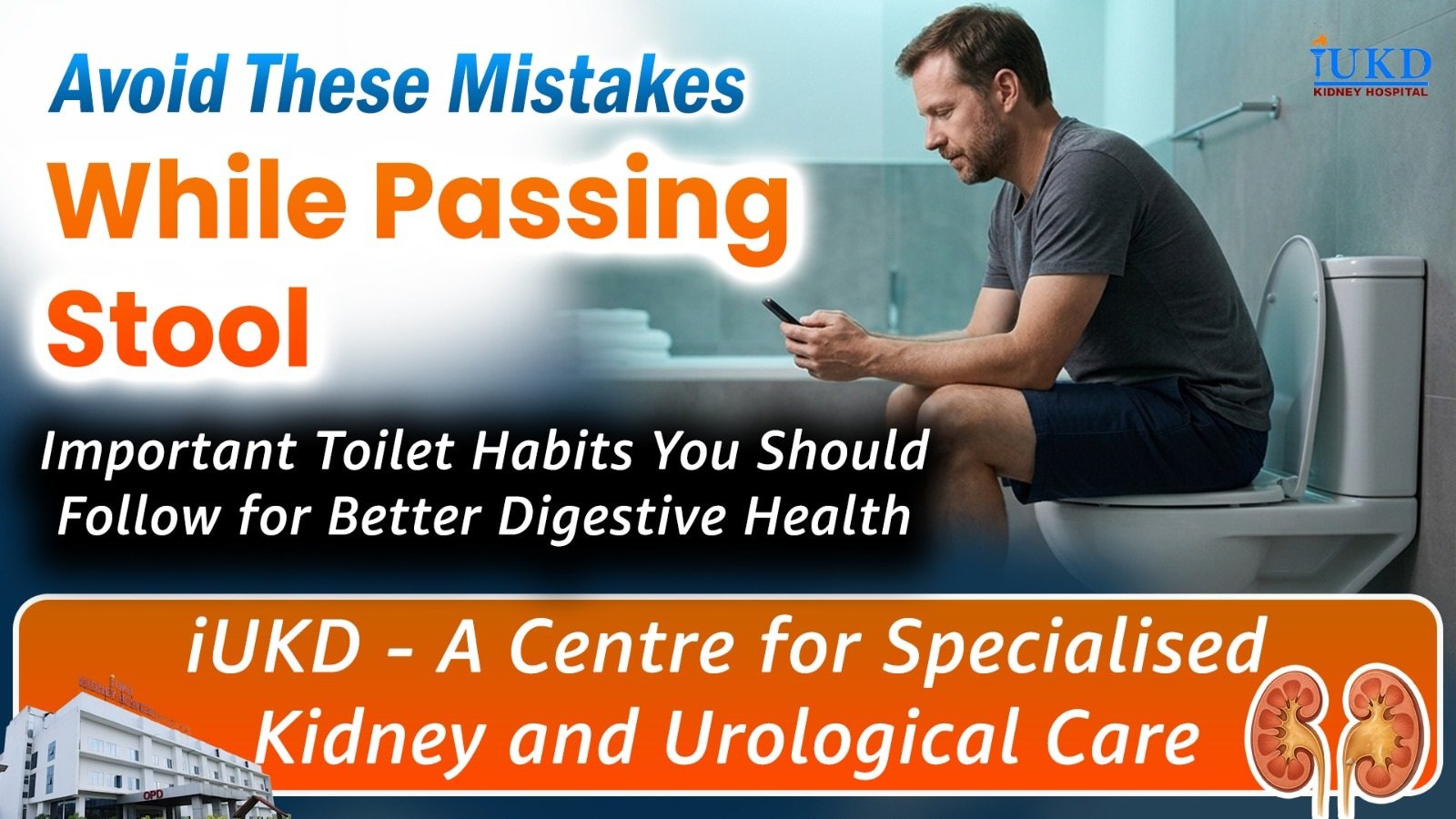
Important Toilet Habits You Should Follow for Better Digestive Health
iUKD: A Centre for Specialised Kidney and Urological Care
Passing stool is a natural bodily function, but certain toilet habits can contribute to constipation, piles (haemorrhoids) and other bowel-related problems. Maintaining healthy toilet habits is important for comfortable bowel movements and overall digestive health.
- Never Ignore the Urge to Pass Stool Regularly
Due to busy schedules or a lack of clean toilet facilities, many people delay going to the toilet even when they feel the urge to pass stool. Occasional delays may not cause significant problems, but repeatedly ignoring the urge can contribute to constipation.
When stool remains in the large intestine for longer than necessary, more water is absorbed from it. As a result, the stool becomes harder and more difficult to pass. Therefore, it is advisable to respond to the urge to pass stool rather than postponing it unnecessarily.
- Avoid Using Your Mobile Phone for Long Periods on the Toilet
Many people carry their mobile phones into the toilet and spend a long time scrolling, chatting or watching videos while sitting on the toilet seat.
Prolonged sitting on the toilet can increase pressure on the blood vessels around the anus. Spending excessive time on the toilet, particularly when combined with straining, may increase the risk of developing or worsening piles (haemorrhoids). Therefore, avoid unnecessary phone use and spend only the time needed to complete a bowel movement.
- Do Not Strain Excessively While Passing Stool
People experiencing constipation often try to force a bowel movement by straining excessively. However, repeated straining increases pressure around the anus and may contribute to piles. It can also cause anal fissures, which are small tears in the lining of the anus and may result in pain or bleeding.
Instead of straining, try to identify the underlying cause of constipation. Eating fibre-rich foods, drinking an appropriate amount of water and staying physically active can help promote regular bowel movements.
People with kidney or heart conditions who have been advised to restrict their fluid intake should follow their doctor’s recommendations regarding water consumption.
- Maintain the Correct Toilet Posture
Your posture while using the toilet can influence how easily you pass stool. When using a Western-style toilet, placing your feet on the floor or on a small, stable footstool so that your knees are slightly higher than your hips may help facilitate bowel movements.
Leaning slightly forward and relaxing your abdominal muscles may also help. However, ensure that the footstool is stable to prevent slipping or falling.
If you cannot pass stool comfortably, avoid sitting and straining for prolonged periods.
- Never Ignore Persistent Constipation
Hard stools, difficulty passing stool, a feeling of incomplete evacuation or fewer bowel movements than usual may indicate constipation.
Eating fibre-rich foods such as vegetables, fruits, whole grains and legumes, maintaining appropriate hydration and exercising regularly can help improve bowel health. However, persistent constipation should be evaluated by a healthcare professional.
Seek prompt medical attention if you experience blood in your stool, severe abdominal pain, vomiting or unexplained weight loss.
It is important to understand that constipation does not directly cause liver or kidney disease. However, persistent bowel problems or associated symptoms should be assessed to identify any underlying condition that may require treatment.
Following healthy toilet habits, responding to the urge to pass stool and addressing constipation early can help support digestive health and overall well-being.
iUKD: Specialised Care for Kidney and Urological Diseases
The Institute of Urology and Kidney Diseases (iUKD), located at Nazirakhat, Sonapur, Guwahati, Assam, provides specialised medical services for a range of kidney and urinary tract conditions.
The hospital offers treatment for kidney stones, prostate disorders, kidney failure, urinary problems in men and women, and various urological cancers affecting the kidneys, urinary bladder, prostate and other reproductive organs. Specialist consultations are also available for various sexual health concerns.
iUKD provides treatment through experienced urologists and nephrologists. The hospital also offers robotic urological surgery.
Under the guidance of Dr. Arup Kumar Nath, Managing Director and Chief Urology Specialist of iUKD, widely known as the “Laser Man of India,” a team of specialist doctors provides care for patients with urological conditions.
People experiencing kidney or urinary tract problems are encouraged to seek appropriate medical evaluation and treatment.
Contact Numbers:
- 8011501833
- 9864104444
Hospital Address:
Kidney Hospital iUKD
Institute of Urology and Kidney Diseases
Nazirakhat, Sonapur, Guwahati, Assam – 782402, India.